


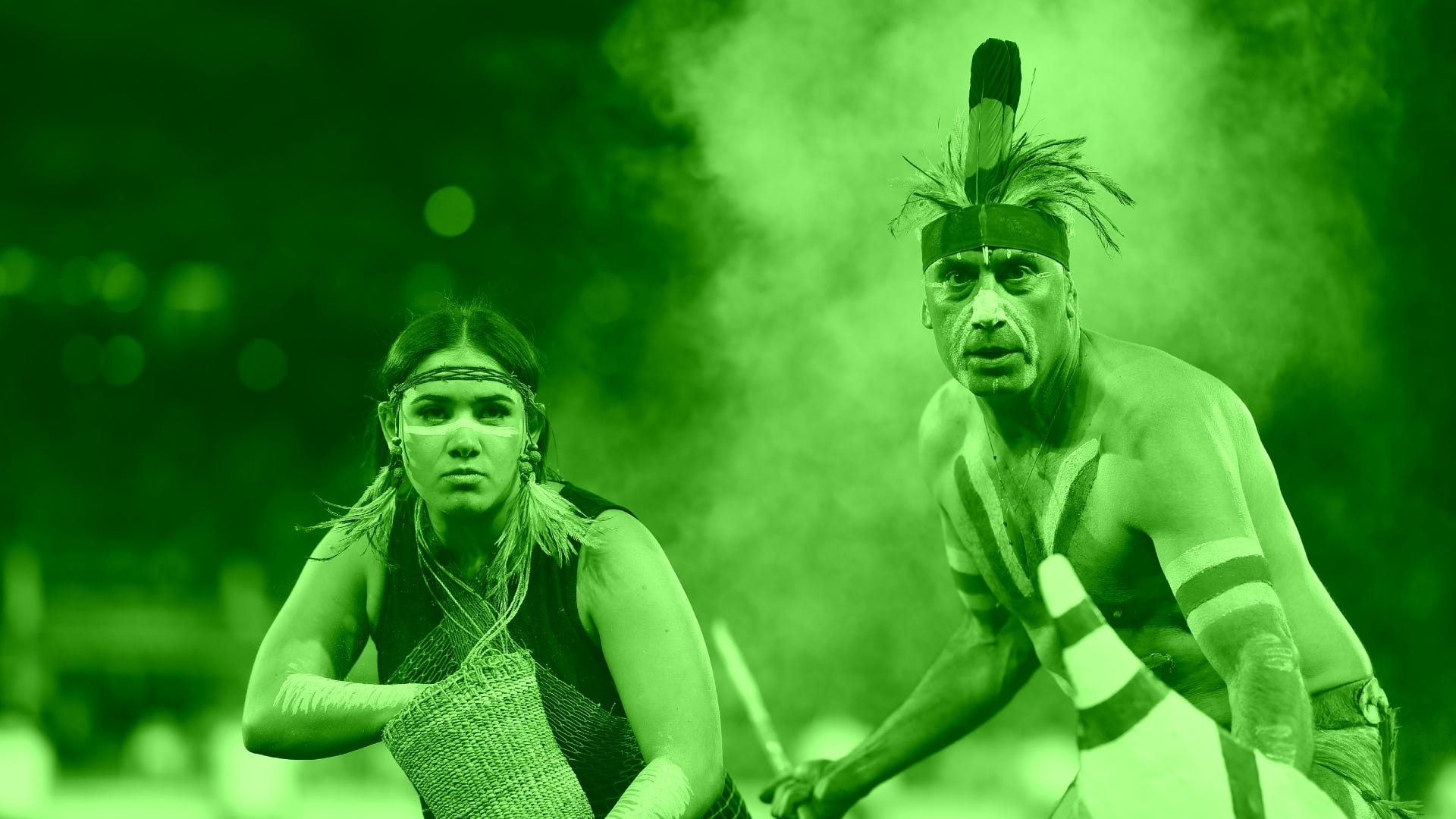
Anyone who has watched the 2023 Women’s World Cup may have noticed two different names on the tournament’s official signage to identify every host venue in Australia and New Zealand.
Melbourne is also known as Naarm, Perth as Borloo and Wellington as Te Whanganui-a-Tara, just to give a few examples. The English language place names are known to most. The indigenous terms for the land these cities sit on, however, might not be so familiar to fans watching from around the world.
These signs reflect the political backdrop against which the 2023 Women’s World Cup is being played. Later this year, Australia will vote in a referendum on whether to constitutionally recognise indigenous people in the country’s parliament. Polls show a divided country.
Some argue the use of indigenous names in official Women’s World Cup signage, and the indigenous imagery performed before every match, is empty symbolism.
So is football doing enough to truly represent the people of the First Nations?
